1. How GSM & 4G LTE Actually Work
Every time you send a WhatsApp message or stream on Toggle, your phone is performing a rapid, invisible handshake with a cell tower. Understanding that process — from radio waves to data packets — is the first step to truly understanding Singapore's mobile landscape.
The Radio Access Network (RAN)
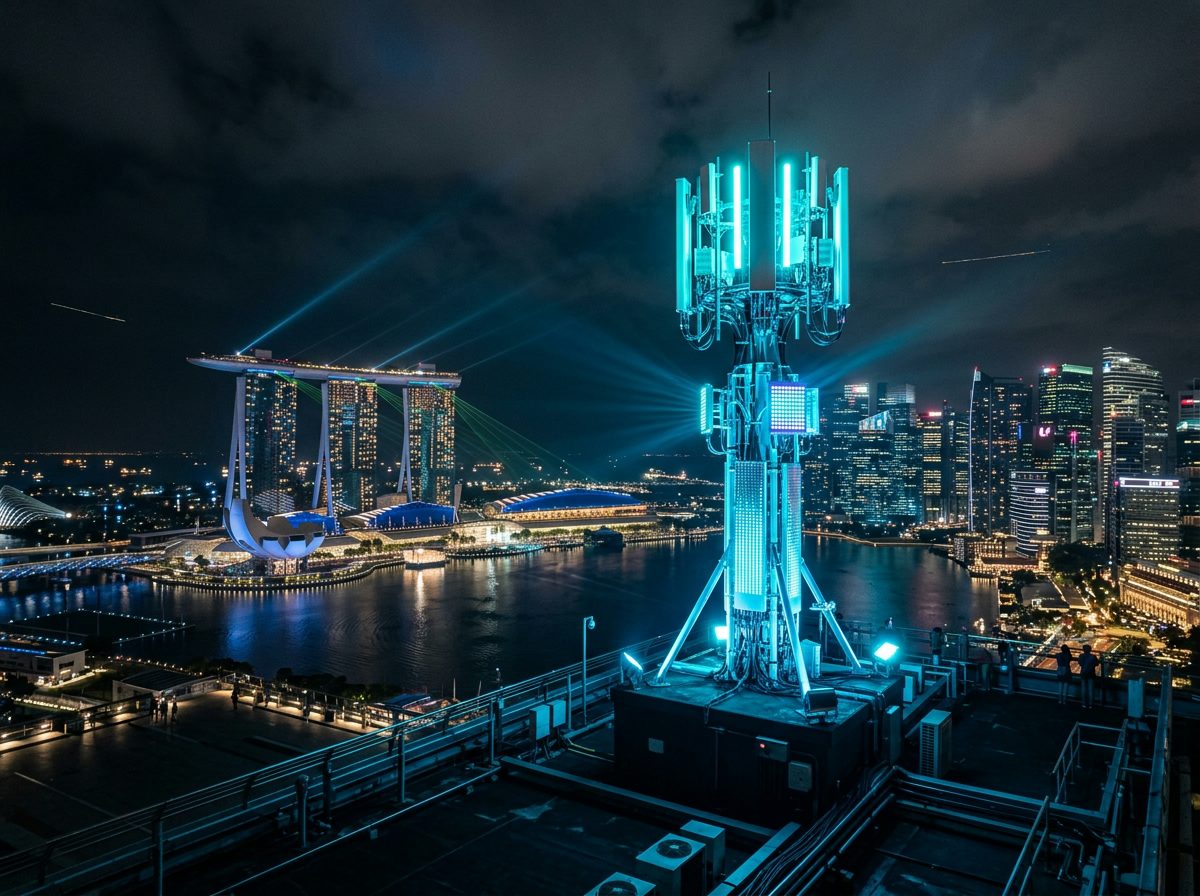
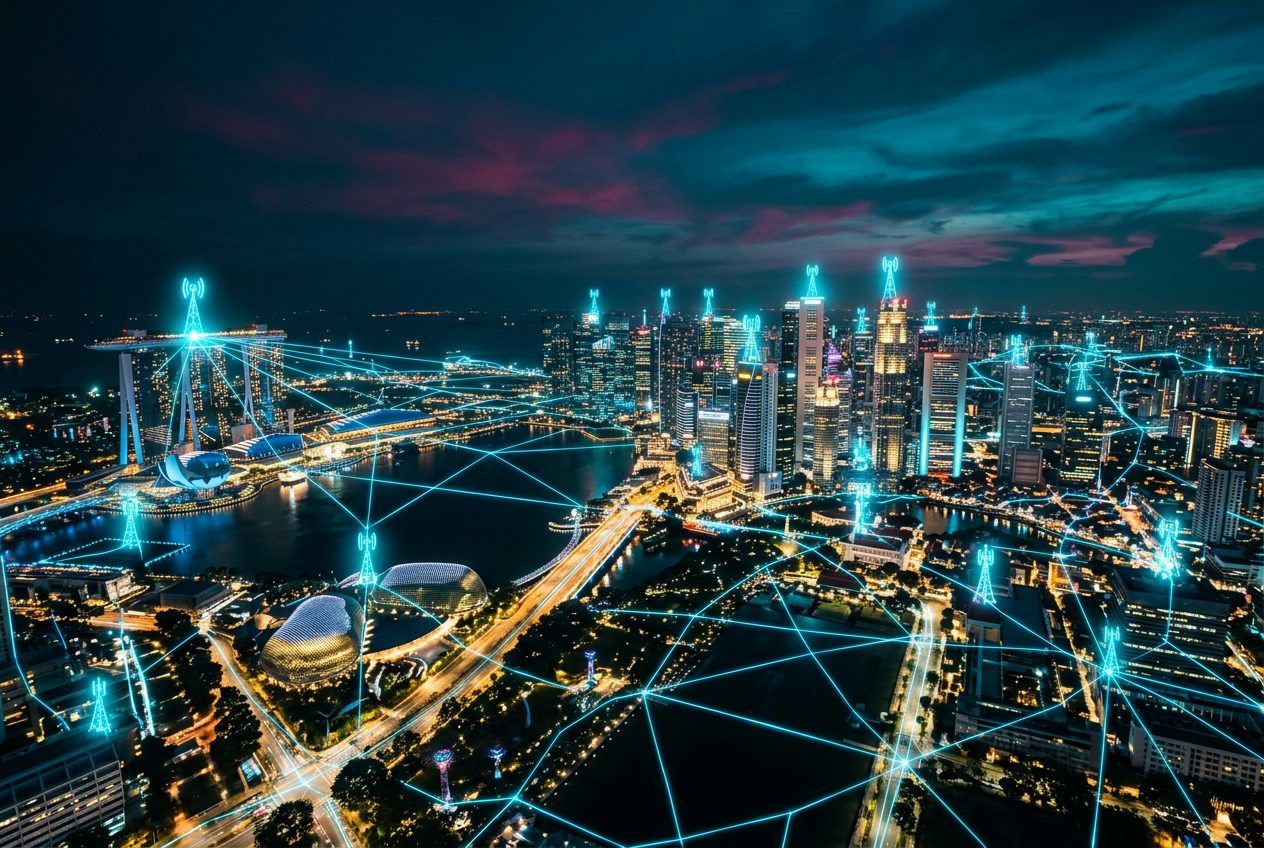
Mobile networks are built on three tiers: your handset, the Radio Access Network (RAN), and the core network. The RAN is a mesh of base stations — formally called eNodeBs in 4G LTE, or gNodeBs in 5G — dotted across the island. Singapore's compact geography actually makes it one of the most densely covered markets in Southeast Asia, with Singtel, StarHub, and M1 each operating thousands of sites.
A base station is essentially a high-powered transceiver mounted on a rooftop, street lamp, or dedicated mast. It broadcasts radio signals across a defined cell area. When your phone powers on, it scans for the strongest pilot signal from a nearby base station and negotiates a connection — a process called cell registration.
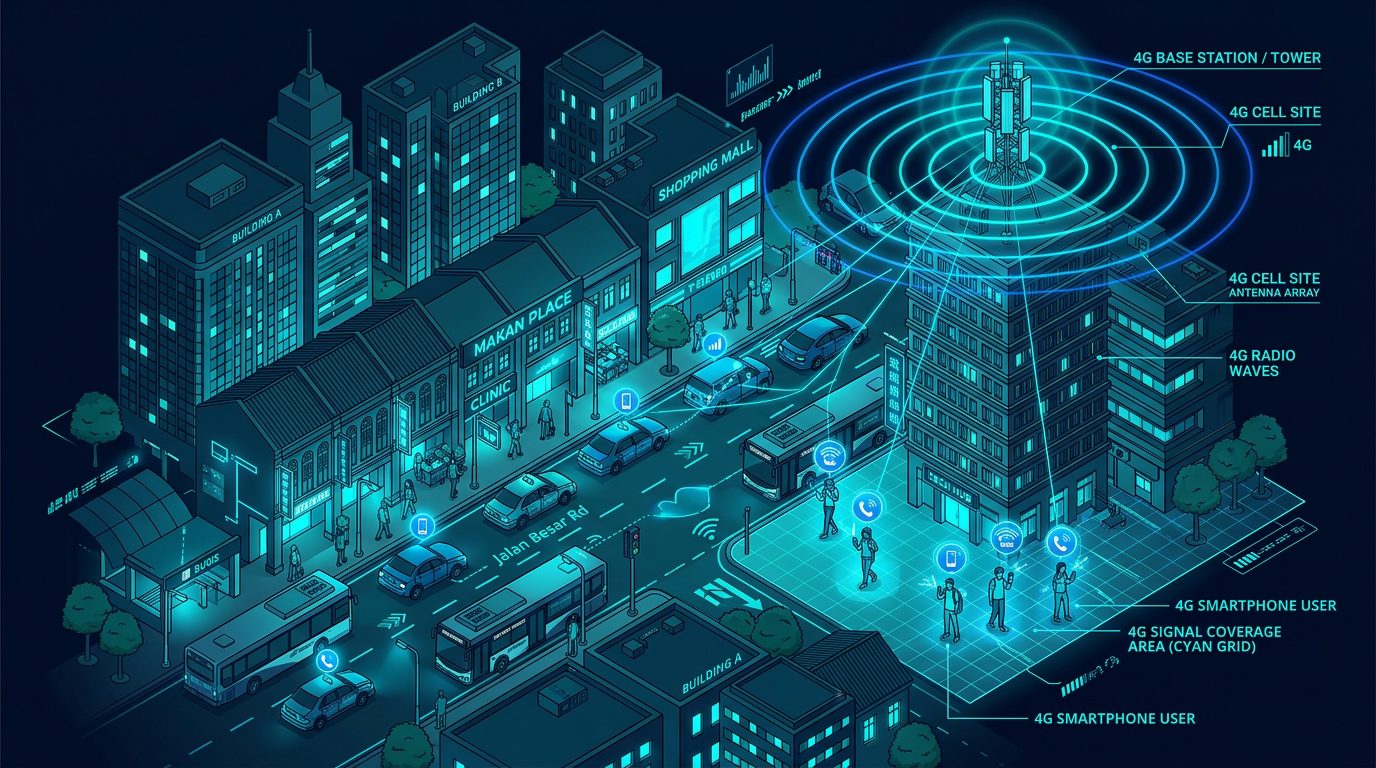
Fig. 1 — A single eNodeB covers a cell sector; neighbouring sectors form a continuous coverage grid.
From GSM to LTE: A Quick Timeline
GSM (2G) introduced digital voice and SMS in Singapore in the early 1990s. It used TDMA — Time Division Multiple Access — slicing a radio channel into time slots so multiple calls could share the same frequency. Data was an afterthought, delivered via GPRS at agonising 50–100 Kbps.
3G (UMTS/HSPA+) replaced time-slicing with CDMA — Code Division Multiple Access — allowing all users to broadcast simultaneously on the same frequency, distinguished by unique spreading codes. Download speeds jumped to a theoretical 42 Mbps on HSPA+.
4G LTE ditched CDMA for OFDMA — Orthogonal Frequency Division Multiple Access. The radio channel is split into hundreds of narrow sub-carriers (each 15 kHz wide), and the network allocates specific sub-carriers to each user dynamically, every millisecond. This makes LTE extraordinarily efficient in dense urban environments like the CBD, Orchard Road, or Changi Airport. Peak theoretical speeds reach 150–600 Mbps per channel, though real-world Singapore averages hover around 60–90 Mbps depending on load.
"In LTE, the radio resource grid is re-optimised every 1 ms — meaning your phone's allocation changes 1,000 times a second to match real-time demand."
What Happens When You Make a Call
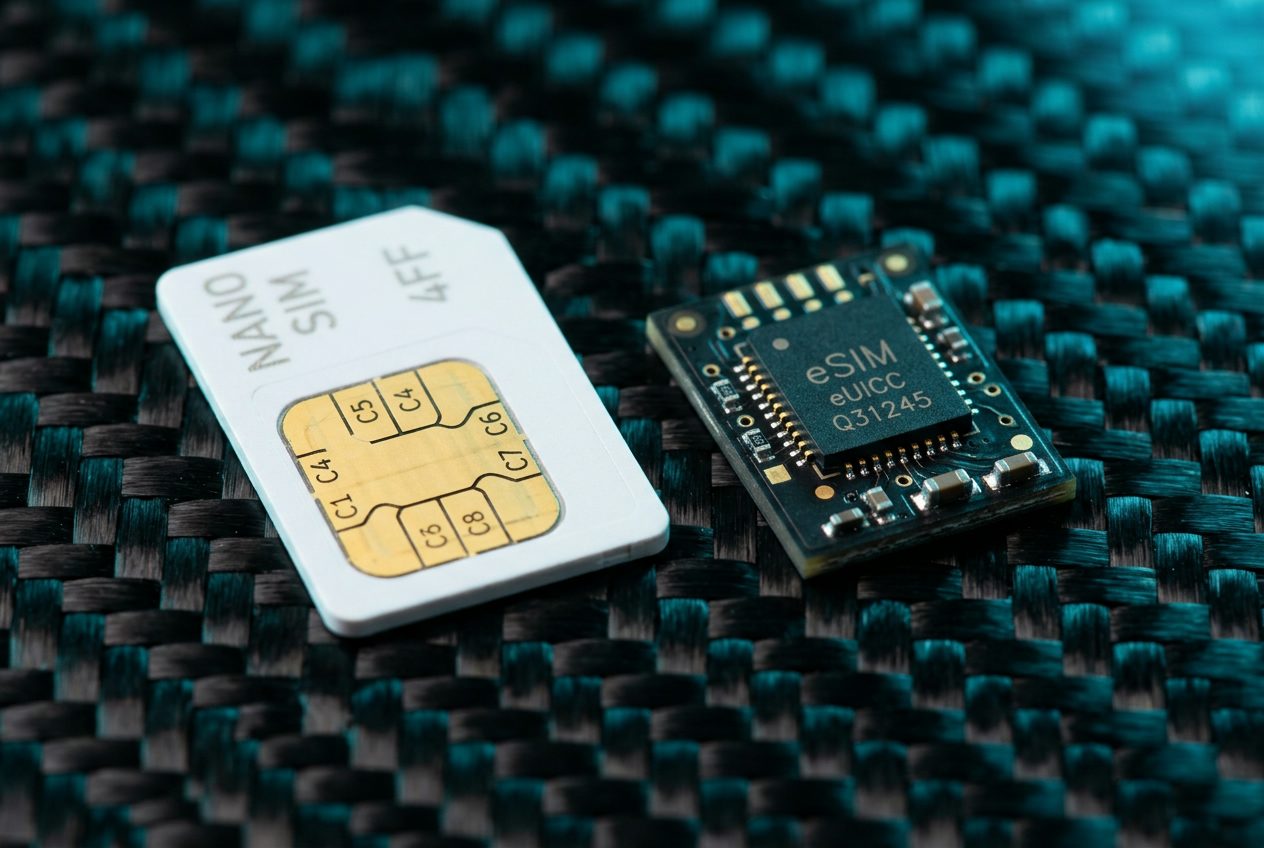
When you dial, your phone signals the nearest eNodeB, which forwards the request through the core network's Mobility Management Entity (MME). The MME authenticates your SIM via your IMSI — your unique subscriber identity — checks with the Home Subscriber Server (HSS) for your subscription profile, and sets up a bearer path (think: a dedicated pipe) for your voice or data session. Modern VoLTE (Voice over LTE) calls travel this same data path, giving crystal-clear HD voice quality instead of the compressed audio of 3G.
As you move across Singapore — say, from Raffles Place MRT to Dhoby Ghaut — your phone continuously measures signal strength from adjacent cells. When a stronger candidate is detected, the network executes a handover in under 50 ms, so seamless you never notice. Singapore's dense base-station grid makes dropped-handover events extremely rare compared to larger countries.
2. Singapore's Licensed Spectrum Bands
Radio spectrum is a finite national resource. In Singapore, the Infocomm Media Development Authority (IMDA) licenses specific frequency ranges to operators through public auctions. Each band has distinct physics — lower frequencies travel farther and penetrate walls better; higher frequencies carry more data but over shorter distances. Here's how Singapore's allocations break down:
| Band | Frequency | Generation | Key Characteristic |
|---|---|---|---|
| 700 MHz | 703–803 MHz | 4G LTE (Band 28) | Deep indoor penetration; covers MRT tunnels and basements. Singapore's 'coverage workhorse'. |
| 1800 MHz | 1710–1880 MHz | 4G LTE (Band 3) | High-capacity urban band; widely deployed islandwide for balanced speed and reach. |
| 2100 MHz | 1920–2170 MHz | 4G LTE (Band 1) | Original 3G band, re-farmed for LTE. Provides strong mid-range capacity in dense districts. |
| 3.5 GHz | 3300–3800 MHz | 5G NR (n78) | Primary 5G mid-band. 100 MHz blocks enable gigabit-class speeds with reasonable coverage. |
| 28 GHz | 26.5–29.5 GHz | 5G NR mmWave (n257) | Ultra-high capacity, very short range (~100 m). Targeted at Changi T5, smart factories, and stadiums. |
The 700 MHz band is particularly significant for Singapore. Its long wavelength (about 43 cm) means signals diffract around obstacles and penetrate concrete structures far more effectively than higher bands. This is why MRT commuters on the underground North-South Line still enjoy solid LTE — base stations are fewer but each covers a larger physical area.
At the other extreme, 28 GHz mmWave can barely pass through a glass window. Its value lies in raw throughput density — in a stadium with 50,000 fans, a single mmWave node can serve thousands of concurrent streams without congestion. IMDA's mmWave licensing specifically targets fixed-use cases: warehouses, ports, smart manufacturing floors, and event venues, rather than broad outdoor coverage.
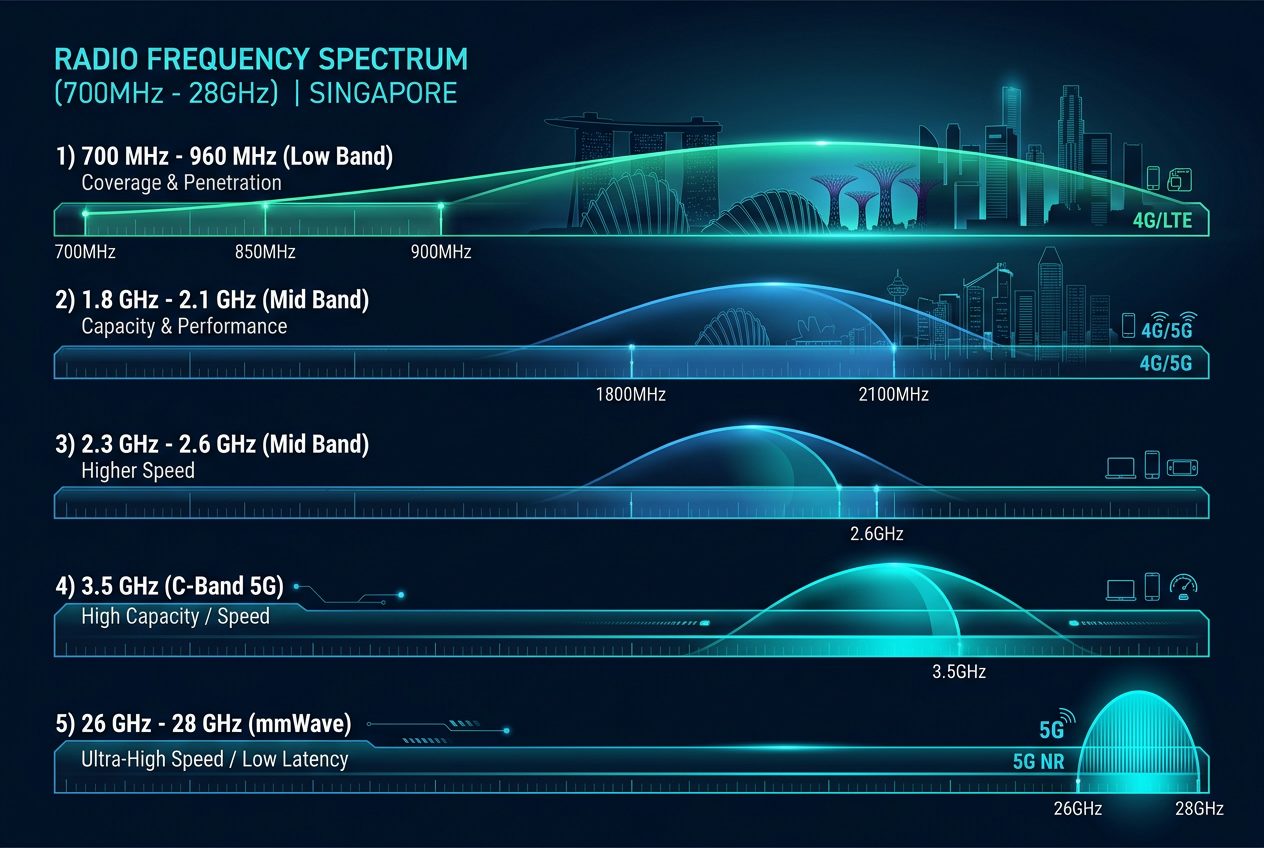
Fig. 2 — Spectrum allocation and effective coverage radius by band. Lower frequency = wider reach; higher frequency = more capacity.
"Singapore allocated 100 MHz of contiguous 3.5 GHz spectrum per operator — one of the most generous mid-band blocks in Asia-Pacific, enabling true gigabit 5G at scale."
3. NSA vs SA 5G: Why Singapore Chose Standalone
When operators first deploy 5G, they face a critical architectural choice: build on top of existing 4G infrastructure (Non-Standalone, NSA), or construct a fully independent 5G core (Standalone, SA). Most markets defaulted to NSA for speed and cost — Singapore deliberately went the harder route.
Non-Standalone (NSA) Architecture
In NSA mode (3GPP Option 3x), 5G NR radio (gNodeB) is bolted onto a 4G core network. The LTE eNodeB acts as the Master Node: it handles signalling, authentication, and mobility. The 5G gNodeB is a Secondary Node that provides extra data capacity — essentially a high-speed data pipe bolted onto a 4G framework.
NSA is cheaper and faster to deploy because operators reuse their existing 4G core equipment. The downside: the 4G core becomes a bottleneck. Latency is constrained by LTE's control plane (typically 20–30 ms). Advanced 5G features — network slicing, ultra-reliable low-latency communications (URLLC), and native cloud-native functions — are simply not possible in NSA, because the core lacks the software architecture to support them.
Standalone (SA) Architecture
SA 5G (3GPP Option 2) deploys a full 5G core (5GC) built on a cloud-native, service-based architecture. Control and user-plane functions are separated (CUPS), virtualised, and run as microservices on commodity servers. The 5G NR radio connects directly to this new core, with no LTE dependency.
This unlocks three capabilities that make SA genuinely transformative:
Sub-10ms Latency
SA's control plane operates entirely in the 5G core, cutting round-trip latency from ~25 ms (NSA) to under 10 ms — critical for robotics, telesurgery, and real-time industrial control.
Network Slicing
Operators can carve the physical network into isolated virtual slices — one for emergency services with guaranteed bandwidth, another for a smart port's autonomous vehicles, another for consumer streaming.
Resilience by Design
Because the 5GC is fully software-defined and distributed, failures don't cascade the way hardware-dependent LTE cores do. Functions auto-restart and re-route across cloud nodes without service interruption.
Why Singapore Mandated SA
IMDA's 5G spectrum conditions explicitly required Singtel and the StarHub-M1 joint venture (JV) to deploy SA 5G covering at least 50{b8f9decddc73519cce605c579521de1750678dd64817209013596cbd83ac9126} of Singapore's land area by end-2022, rising to nationwide outdoor coverage by end-2025. This made Singapore one of only a handful of countries globally to mandate SA from day one, rather than allowing operators to coast on NSA.
The rationale is closely tied to Singapore's Smart Nation ambitions. Use cases like autonomous port operations at Tuas, remote industrial monitoring, and emergency services interoperability all require the low-latency and slicing capabilities that only SA can deliver reliably. IMDA made a deliberate trade-off: slower initial rollout in exchange for a future-ready network architecture that doesn't require ripping out the core years later.
"NSA gets you 5G speeds. SA gets you 5G capabilities. Singapore decided the second matters more."
As of mid-2025, both Singtel and the StarHub-M1 JV (operating as 5G by StarHub and 5G by M1) have met or exceeded IMDA's coverage milestones. Consumer SA devices — including iPhone 15 series, Samsung Galaxy S24 and S25, and select Pixel 9 models — automatically connect to the SA core when in range, though most users will not notice a dramatic speed difference day-to-day. The SA advantage becomes evident in latency-sensitive applications and in network reliability during peak congestion events.
4. MVNOs: How Circles.Life, GOMO & Others Fit In
Walk into any Singaporean phone shop and you'll see plans from Circles.Life, GOMO, Grid Mobile, Zero Mobile, and a dozen others. None of them own a single base station. So how are they delivering mobile service? The answer lies in a commercial framework called Mobile Virtual Network Operation.
What Is an MVNO?
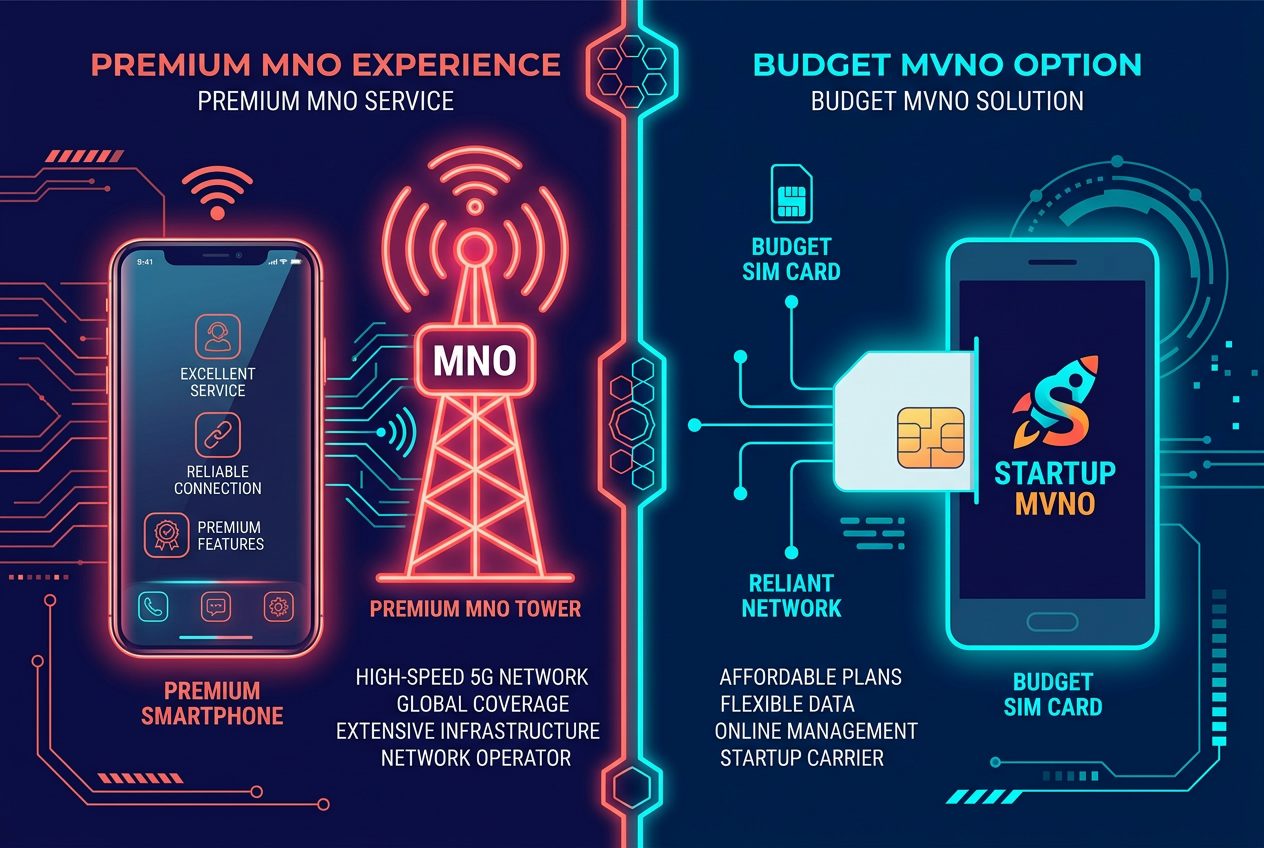
A Mobile Virtual Network Operator (MVNO) is a licensed telecoms company that purchases wholesale access to a Mobile Network Operator's (MNO's) infrastructure — spectrum, base stations, core network — and resells it under its own brand. In Singapore, the three MNOs are Singtel, StarHub, and M1. All local MVNOs lease capacity from one of these three.
There are different depths of MVNO arrangement. A light MVNO (or MVNE-hosted MVNO) is simply a reseller — it has its own SIM and brand but uses the MNO's billing, provisioning, and core wholesale stack with almost no independent systems. A full MVNO operates its own HLR/HSS (subscriber database), billing platform, and sometimes its own SMSC — giving it full visibility and control over its subscriber base. Circles.Life is Singapore's most prominent full MVNO, running on the M1 network with its own cloud-native backend.
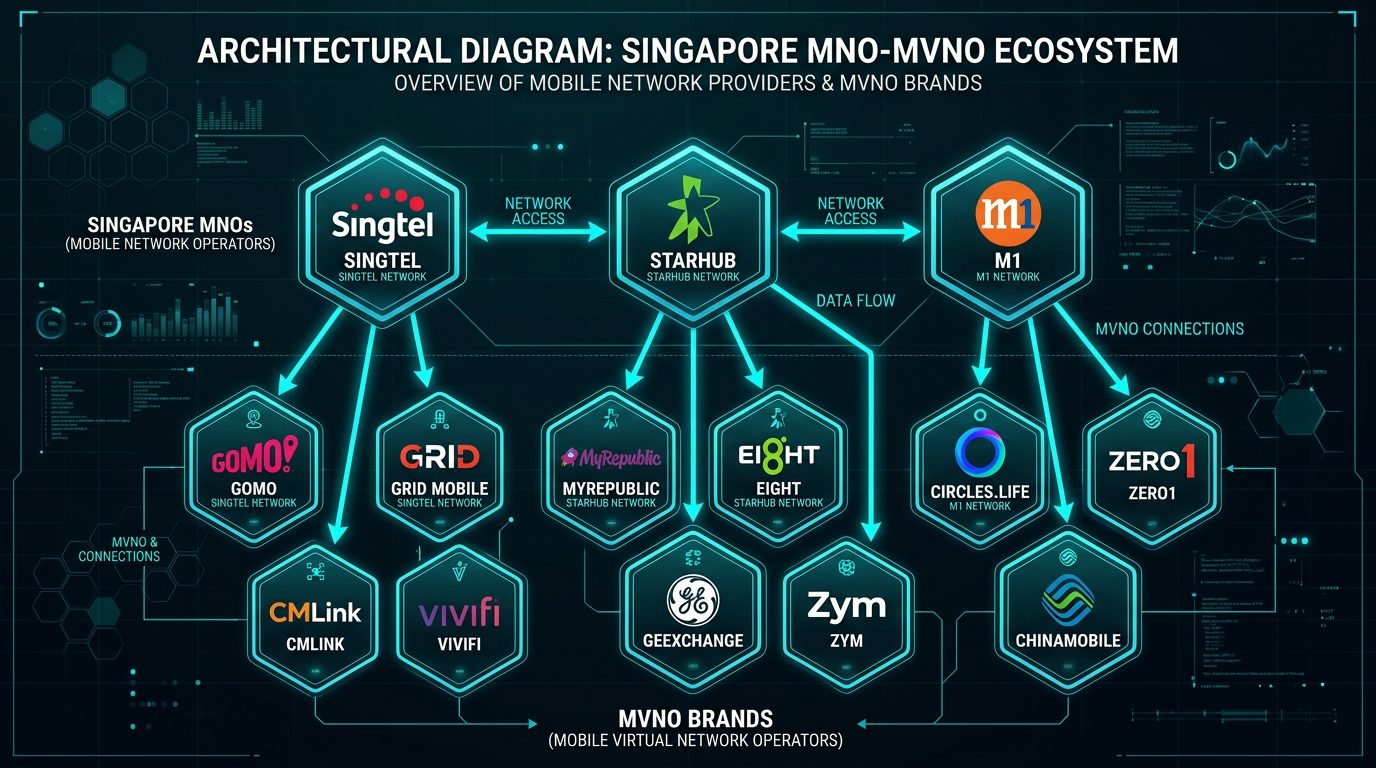
Fig. 3 — Singapore's MVNO ecosystem. MVNOs lease capacity from MNOs but compete independently on price and product design.
How Capacity Leasing Works
An MVNO negotiates a wholesale agreement with its host MNO specifying several key terms: a committed minimum spend, a wholesale data rate (price per GB of traffic at the core), roaming pass-through fees, QoS (Quality of Service) priority levels, and SLA uptime guarantees. When an MVNO subscriber makes a call or uses data, their traffic flows through the host MNO's RAN and core exactly as if they were an MNO subscriber — the MVNO's SIM card carries a unique MVNO identifier (MVNO IMSI range) that the core uses to route billing records back to the MVNO's systems.
One important nuance: MVNO subscribers are typically assigned lower QoS priority during peak network congestion compared to the host MNO's direct subscribers. In practice, Singapore's dense network means congestion events are rare, so most users experience equivalent speeds. However, during large-scale events — National Day Parade, Formula 1 weekend, New Year's Eve at Marina Bay — MVNO users may experience slightly higher latency or reduced throughput compared to Singtel, StarHub, or M1 direct subscribers.
Key MVNOs in Singapore & Their Host Networks
| MVNO Brand | Host MNO | MVNO Type | Notable Angle |
|---|---|---|---|
| Circles.Life | M1 | Full MVNO | Digital-first, no physical stores. Cloud-native billing. Add-ons via app. |
| GOMO | Singtel | Light MVNO | Singtel subsidiary targeting budget-conscious digital natives. |
| Grid Mobile | StarHub | Light MVNO | Unlimited-first plans; targets heavy data users. |
| Zero Mobile | M1 | Light MVNO | Pay-as-you-use positioning; no contract, no base fee plans available. |
| RedOne | Singtel | Light MVNO | Targets Malaysian work-pass holders and cross-border commuters. |
For consumers, MVNOs have been unambiguously positive. When Circles.Life launched in 2016 with 20 GB data plans at prices that undercut MNO equivalents by 40–60{b8f9decddc73519cce605c579521de1750678dd64817209013596cbd83ac9126}, it triggered a market-wide repricing. StarHub and M1 responded with their own digital sub-brands (GOMO and Grid Mobile respectively), and Singtel eventually launched GOMO as a Singtel subsidiary. Today, Singaporeans enjoy some of the lowest per-GB mobile data costs in the world — a direct consequence of MVNO-driven competition.
"Circles.Life's 2016 launch didn't just introduce a new brand — it restructured Singapore's mobile pricing for a decade."
Understanding the MVNO-MNO relationship matters when choosing a plan. If you travel frequently to Malaysia or Indonesia, check whether your MVNO's roaming rates pass through the MNO's negotiated wholesale rates or add an extra margin. For heavy data users who need consistent peak throughput during congested events, an MNO direct plan may edge out an MVNO on sustained real-world performance. For everyday urban usage — commuting, streaming, social media — an MVNO on Singapore's dense network is effectively indistinguishable from an MNO plan at a significantly lower price point.